



Description
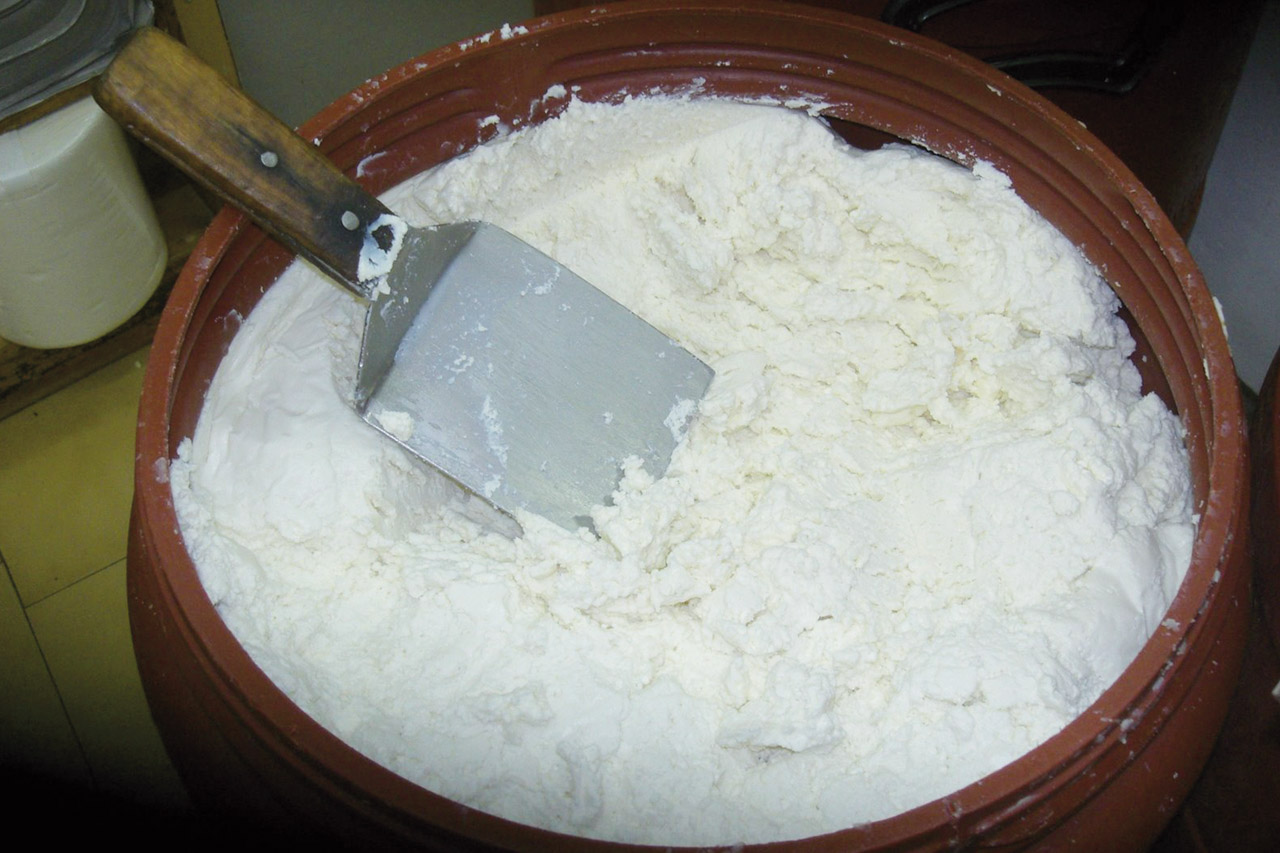
The Pichtogalo Chanion PDO is a fresh spreadable and soft cheese, produced with non-pasteurised sheep's or goat's milk or with mixed ovine and caprine milk.
Production Area
The Pichtogalo Chanion PDO production area is within the prefecture of Chania, on the island of Crete.
Production Method
The milk is curdled at a temperature of 18-25°C for approximately two hours. Once the curd is obtained, the paste is left to acidify for 24 hours, after which it is placed in specific cloths to drip and thus to eliminate the excess liquid. A small amount of salt (1%) is then added to the drained cheese, and at that point it is ready for consumption, without having to undergo a maturation process.
Appearance and Flavour
The Pichtogalo Chanion PDO is a fresh, creamy, white cheese without a rind and without holes. It is characterised by a slightly salted and fairly sour taste, with an aftertaste of flavoured and slightly spicy milk. A yoghurt aroma with a spicy scent is also distinguishable.
History
The history of the Pichtogalo Chanion PDO is centuries-old. Its origins are identifiable in the territories adjacent to the city of Chania, from where it propagated becoming the cheese traditionally consumed by the inhabitants of the Crete highlands.
Gastronomy
The Pichtogalo Chanion PDO is a fresh cheese that should be kept in the refrigerator for no longer than 10 days. It is enjoyed as table cheese, usually spread on bread or as appetizer served with ouzo or red wine.
Marketing
The product is sold as Pichtogalo Chanion PDO. It is marketed vacuum packaged in metal containers.
Distinctive Features
The Pichtogalo Chanion PDO has always been produced with traditional methods. 90% of its production is made directly at the houses of the breeders, who, for milk and cheese conservation, use the mitata - typical rooms characterised by ideal humidity and temperature for the production and conservation of the cheese.