


Description
Firiki Piliou PDO is an apple from the plant belonging to the Malus domestica B. species and to the ?????? (Firiki) variety.
Production Area
Firiki Piliou PDO is specifically produced within the administrative boundaries of the following municipalities (demo): Portaria, Zagora, Agria, Artemida, Mouresi, Milies and Afetes, and in the Community (koinotita) of Makrinitsa, Thessaly Periphery.
Production Method
The apples are cultivated at a fairly high altitude (300-900 metres a.s.l.) and although the soil contains schist - which usually means poor soil - the proximity of chestnut, beech and strawberry-tree woods helps create fertile soil. The soil is also well drained because the terrain is sloping, which is why the Firikia are grown mainly on terraces; this makes the use of tractors and other agricultural machinery impossible so all the work is done by hand. The plant produces a crop every two years and starts bearing fruit six years after planting, usually in the tenth year and therefore the apples are harvested every two years by hand. After the Firikia Piliou are collected in the orchards they are usually packed in plastic crates and taken to be stored in refrigerated rooms. The repackaging of Firikia Piliou outside the defined geographical area is permitted, in order to satisfy market requirements.
Appearance and Flavour
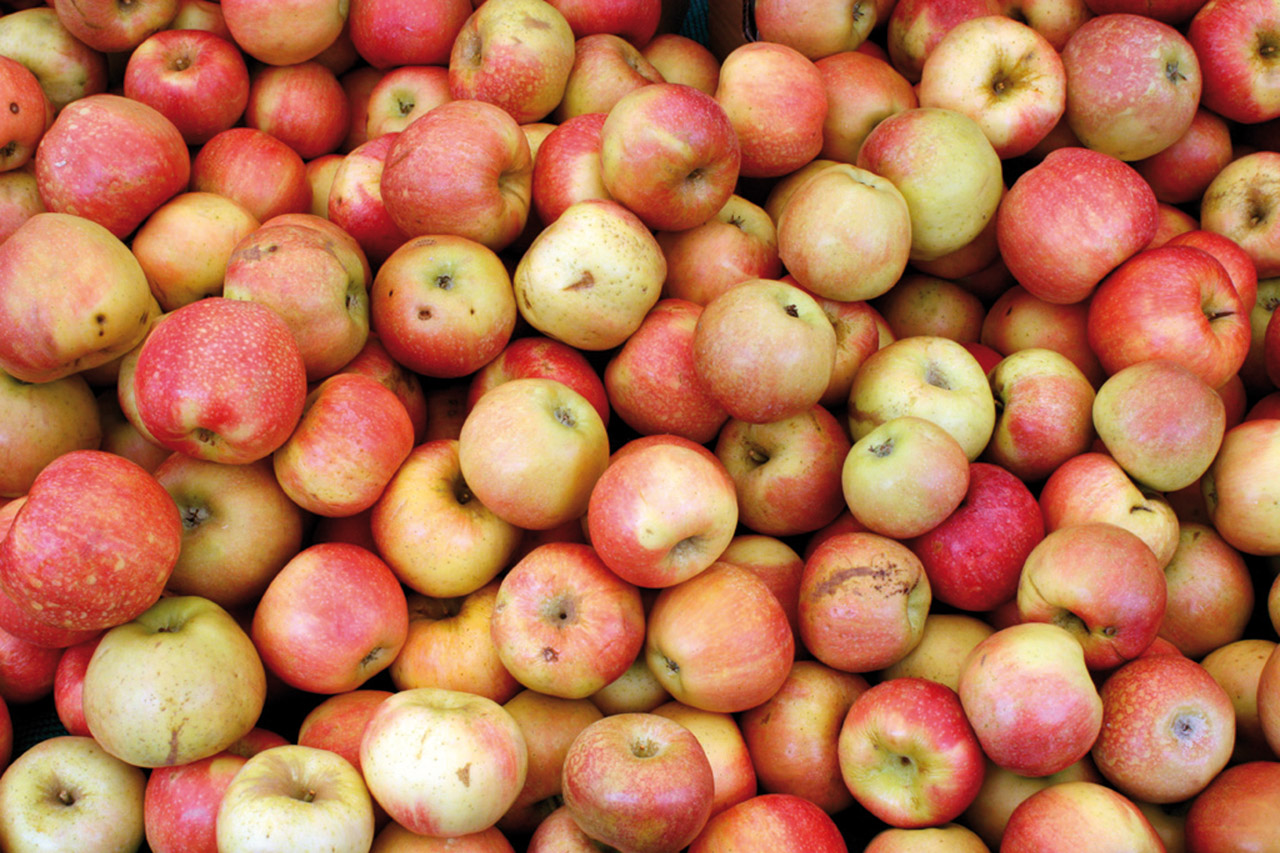
Firiki Piliou PDO is smaller and more elongated in respect to other varieties and has crisper and firmer flesh (6-8 kg/cm²). The skin is smooth and waxy and it is a more vivid red because it is more exposed to the sun. It has a juicy consistency and is sweet tasting with a strong fragrance.
History
The ?????? (Firiki) apple variety is said to come from the Black Sea region and it has been grown in the mountains and foothills of Pelion since the XVIII century. In 1889, in his book ????????? (Prometheus), Zosimas Esfigmenitis tells us that Drakia and Ai Lavrentis had 32 varieties of apple, including ??????? known as 'Ferikia', which were very sought after in the markets of Athens and Thessaloniki. In his book ? «???????» ??-??????? ??? ?????? (The 'Great' Aï-Giorgis of Pelion), published in 1994, Kostas Liapis mentions that around 8000 ?????? trees were planted in Agios Georgios and they started to bear fruit around 1915. The same author mentions Pelion's famous ??????? in his book ???????? ??? ??????????? ??? ????? ??????????? ????? (Traditional Food and Cookery of Pelion). In ?? ?????, ?? ????????? ????? ??? ?????? (Pouri, Pelion's cool mountain village), Nikos Diamantakos writes that until 1935 ?????? were the main variety of apple grown in Pouri and Zagora.
Gastronomy
Firiki Piliou PDO should be kept in a cool dry place away from heat sources and direct light. It is ideally eaten after meals or as a snack, but it can also be used in the preparation of traditional cakes and desserts.
Marketing
The product is marketed as Firiki Piliou PDO. It is packaged in suitable containers.
Distinctive Features
The firm flesh of Firiki Piliou PDO is thanks to the fruit's small size, the high concentration of sugar levels and the occasional, light irrigation.