



Description
The Fassolia Kina Messosperma Kato Nevrokopiou PGI is a bean of the variety Phaseolus vulgaris.
Production Area
The production area of the Fassolia Kina Messosperma Kato Nevrokopiou PGI is within the area of Kato Nevrokopi in the municipal area of Drama, specifically in the agricultural zones of the municipal areas of Kato Nevrokopi, Chrysokefalous, Lefkogia, Exochi, Dasoto, Vathytopos, Katafito, Kato Vrontou, Perithori, Ochiro, Achladia, Pagoneri, Mikrokleisoura, Potami, and Mikromilia, in the Eastern Macedonia and Trace region.
Production Method
Open field cultivation is used. The region's microclimate and the soil - poor in calcium - constitute the relevant elements, associated with the production area's traditional cultivation methods.
Appearance and Flavour
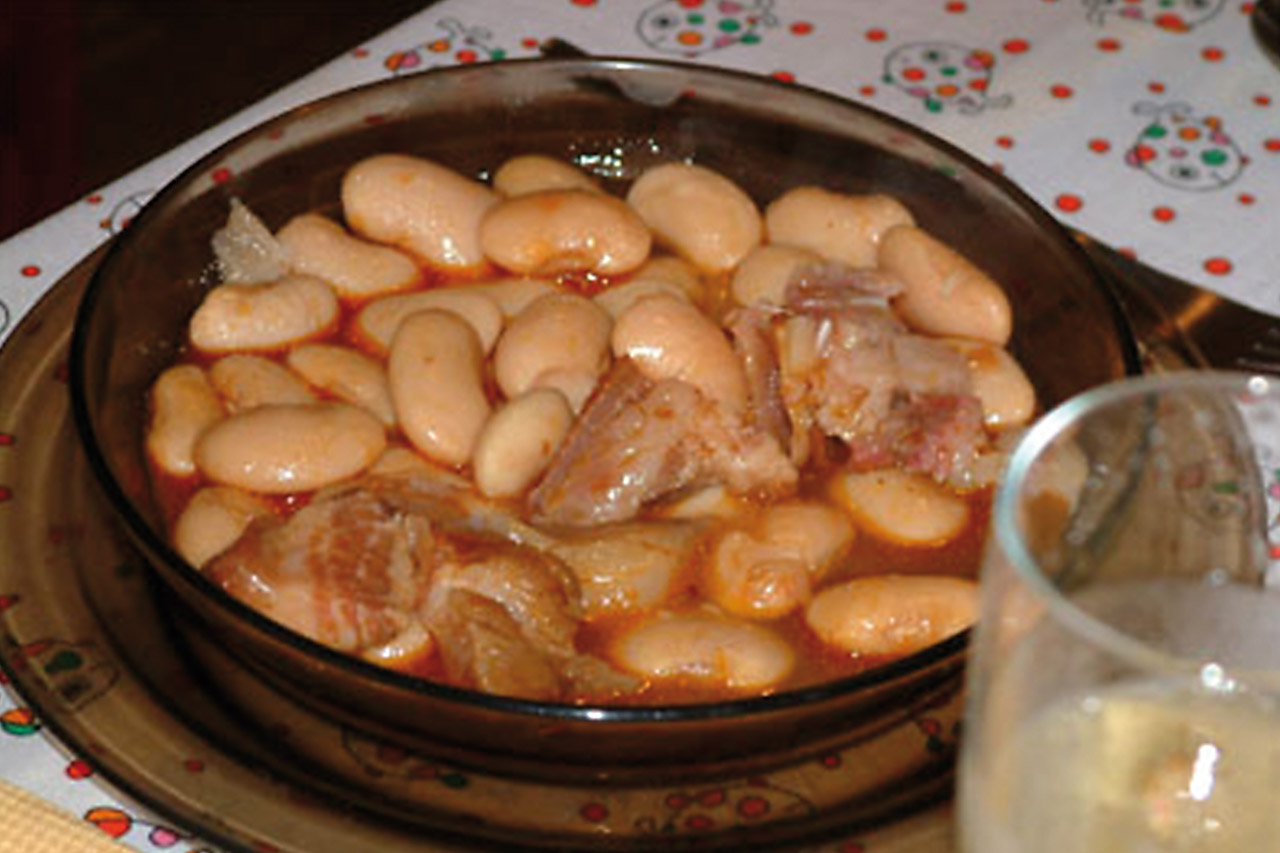
The Fassolia Kina Messosperma Kato Nevrokopiou PGI is a common bean of average size that has cylindrical or flattened seeds. The weight of 1,000 seeds is between 300 g and 450 gr.
History
The history of the Fassolia Kina Messosperma Kato Nevrokopiou PGI is linked to the introduction of bean cultivation in Greece, which dates back to the 16th century. Initially, terrains situated in plain areas were used, but successively, given the particular physiological characteristics and the adaptability to many terrain kinds, the beans started being cultivated on various altitudes. This variety has developed in the area of Kato Nevrokopi, in the municipal area of Drama, quickly winning consumer appreciation.
Gastronomy
The Fassolia Kina Messosperma Kato Nevrokopiou PGI should be kept in a clean place and a dry environment. They are consumed cooked, either baked or boiled, seasoned with oil and served with other vegetable products such as onions, tomatoes, celery and carrots.
Marketing
The product is sold as Fassolia Kina Messosperma Kato Nevrokopiou PGI. It is marketed in bags of ½ kg or 1 kg, which are placed in crates of 10 kg or 20 kg.
Distinctive Features
The excellent quality of the Fassolia Kina Messosperma Kato Nevrokopiou PGI is given by the particular cultivation, linked to the region's micro climate and the soil characteristics, as well as the traditional cultivation methods of the Kato Nevrokopi territory in the Drama region. The product is widely known in the internal market.