



Description
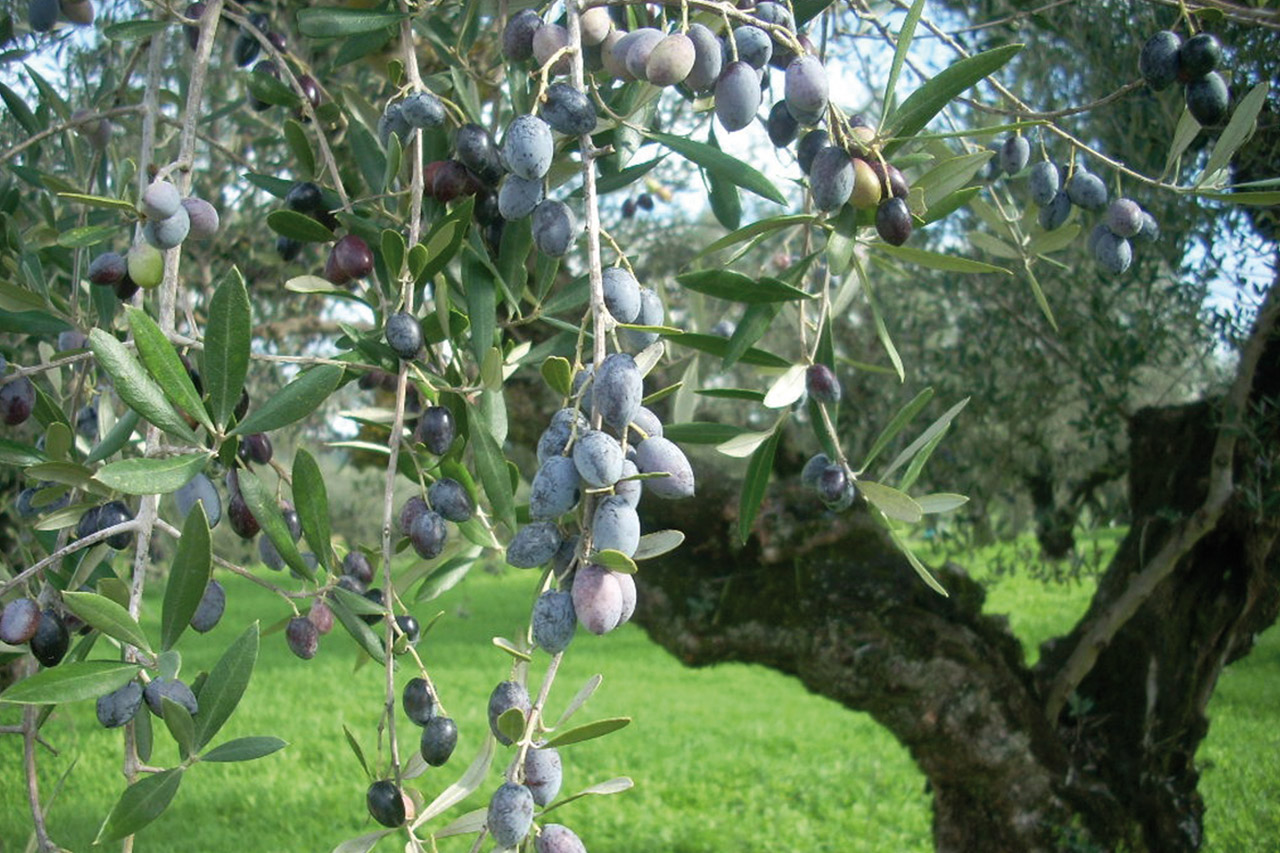
The Elia Kalamatas PDO is a table olive obtained from the olive tree of the Kalamata variety.
Production Area
The production area of the Elia Kalamatas PDO table olives is in the prefecture of Messinia, in the Peloponnese region.
Production Method
The olives are submitted to a yearly treatment with one unit of nitrogen and 0.5 units of phosphorus per tree in the form of hyperphosphoric acid. Furthermore, if the terrain is too dry, a unit of potassium is injected every two years in the form of potassium nitrate, alternatively 0.7 units when tree watering is executed. The watering has to be done three to five times from July through September, like artificial rainfall. The gathering takes place manually once the fruits are fully ripe and have a completely black colour. Transportation is done with plastic crates with a capacity up to 30 kg. Successively the fruit is cut, rinsed and pickled for seasoning. The final product is placed in containers filled with extra-virgin olive oil Elia Kalamatas PDO.
Appearance and Flavour
The Elia Kalamatas PDO is black and the average weight of every olive has to be 6 gr.
History
The history of the table olive Elia Kalamatas PDO is linked to the long-standing tradition of the olive tree culture in Greece, which is evidenced in historical sources and archaeological finds, assigning ancient origins to this cultivation.
Gastronomy
The Elia Kalamatas PDO should be kept for no longer than 180 days at a temperature between 10°C and 16°C. Once the packaging is opened, it is advisable to keep the product in water and salt and consume it within a week.
Marketing
The product is sold as Elia Kalamatas PDO. It is marketed in glass containers up to 1 kg, or in synthetic plastic containers with a screw cap that contain 3.5 kg to 13 kg.
Distinctive Features
The region where the Elia Kalamatas PDO is produced is characterised by a mild climate with mild winters and summers that are not extremely hot. The grounds are clayey-sandy, but also stony. These soil characteristics, coupled with the traditional cultivation practices and the olive processing methods lend this product an exceptional quality.