










Descrizione
Il Pane di Matera IGP è un prodotto di panetteria ottenuto utilizzando semola rimacinata e/o semolato di grano duro, di cui almeno il 20% proveniente da ecotipi locali e vecchie varietà, a cui si aggiungono lievito naturale (lievito madre), sale e acqua.
Zona di produzione
La zona di produzione del Pane di Matera IGP comprende tutto il territorio della provincia di Matera, nella regione Basilicata.
Metodo di produzione
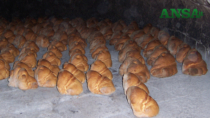
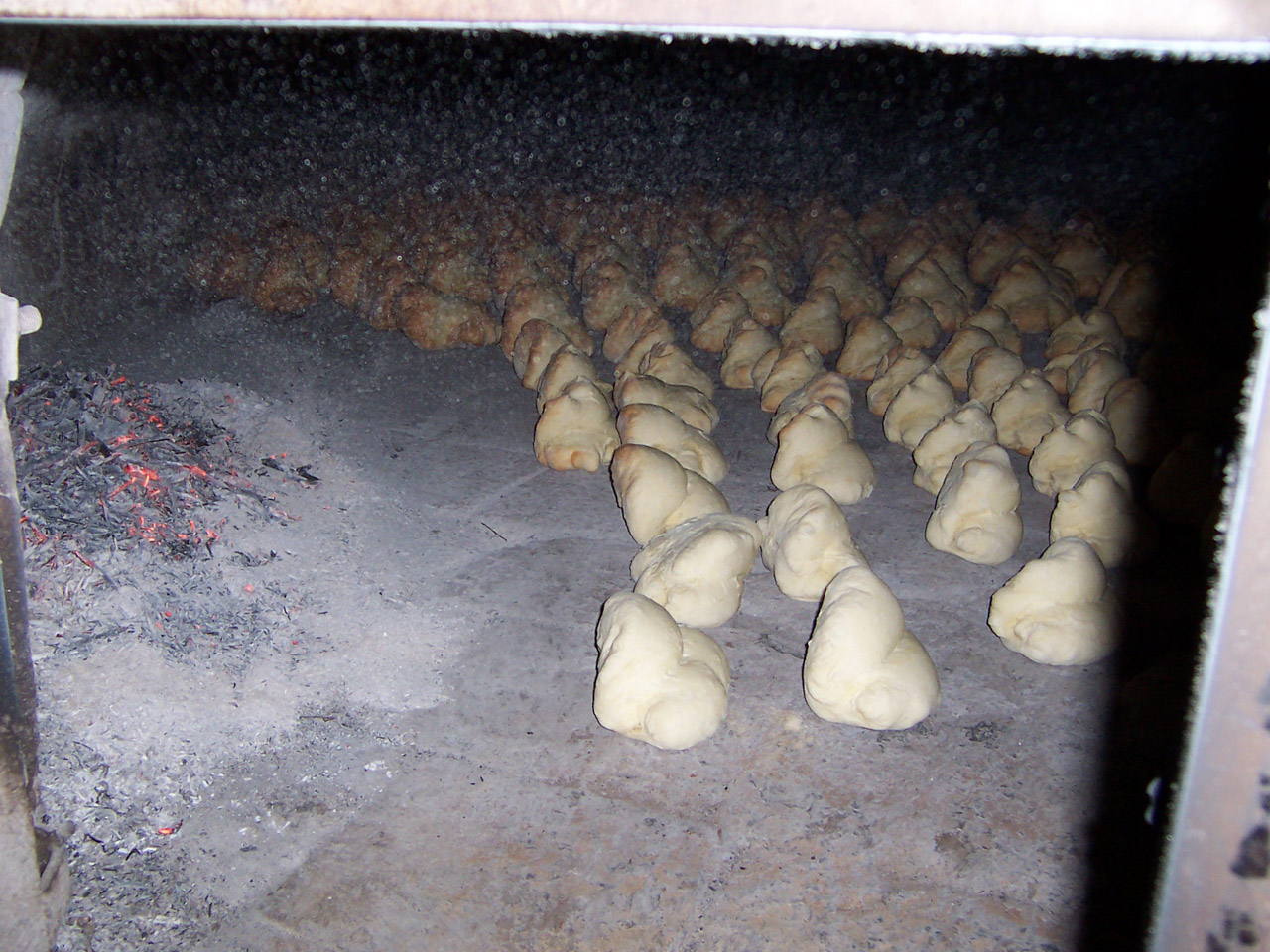
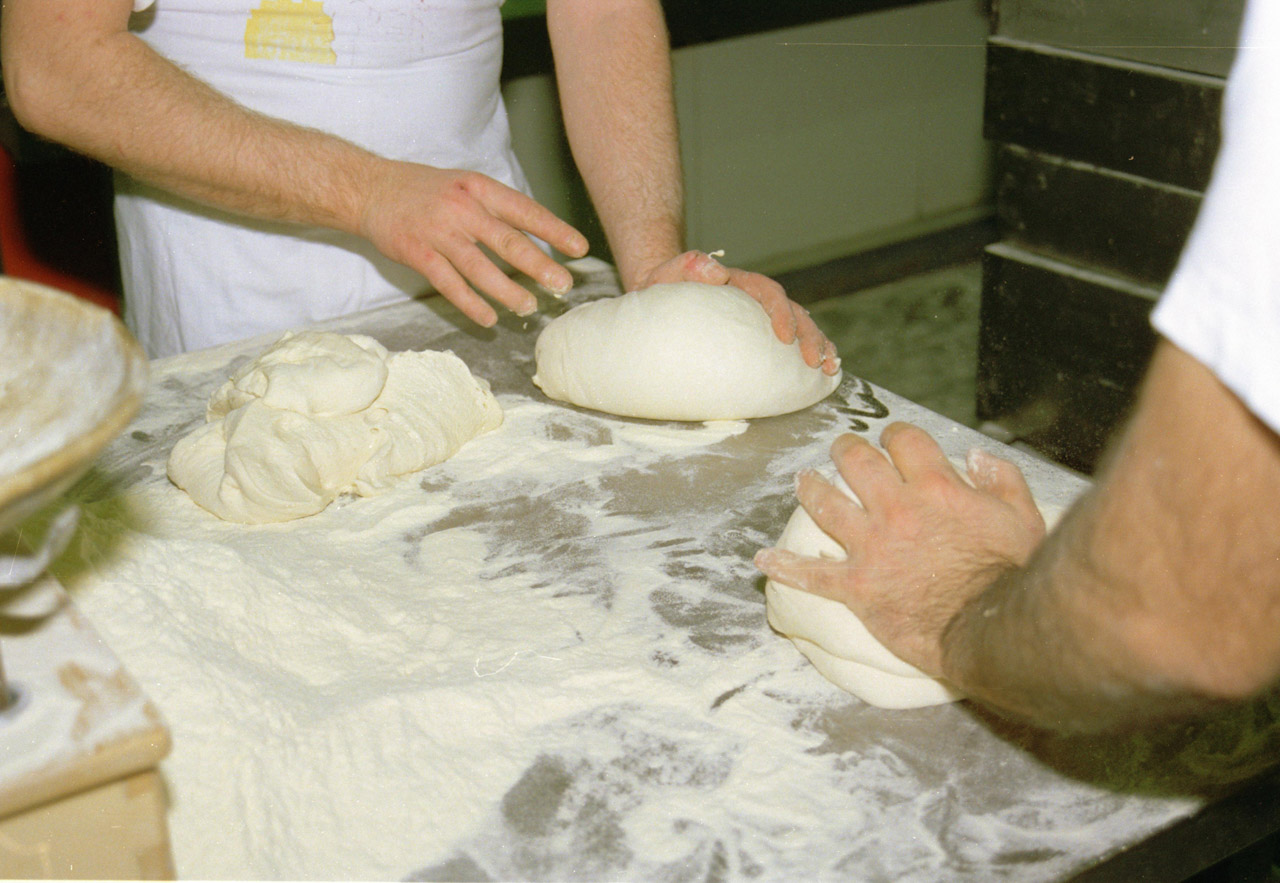
Per la lavorazione si utilizza il lievito madre che, nel caso del Pane di Matera IGP, si ottiene dalla polpa di frutta fresca matura e tenuta in precedenza a macerare in acqua per 48 ore. Il composto viene aggiunto ad acqua e semola e il tutto viene chiuso in un contenitore per alimenti graduato per 10-12 ore, a 26-30°C, nell’attesa che raddoppi di volume. Successivamente viene aggiunta farina in quantità pari al peso ottenuto. Gli ingredienti vengono lavorati nell’impastatrice. L’impasto viene lasciato lievitare in vasca per 25-35 minuti. Terminata la fase della lievitazione, le preforme comprese tra 600 g e 12 kg sono preparate e pesate per ottenere un prodotto finale di pezzatura compresa tra 500 g e 10 kg, con valori che possono variare in un intervallo del 10%. Le preforme vengono modellate a mano e lasciate riposare per 25-30 minuti in idonei contenitori in legno o acciaio inox, coperti con teli. Successivamente alle preforme viene data manualmente la caratteristica forma del Pane di Matera IGP e vengono marchiate sulla sommità con timbro a pressione riportante le lettere in stampato maiuscolo “MT”, per poi infornarle in forni a legna oppure a riscaldamento indiretto. Il tempo di cottura varia in relazione alla pezzatura e al tipo di forno utilizzato, da un minimo di 1 ora per le forme da 500 g a un massimo di 4 ore e 30 minuti per le forme da 10 kg.
Aspetto e sapore
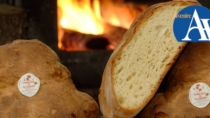
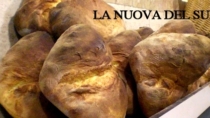
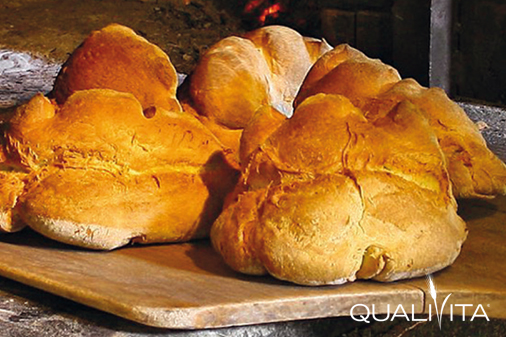
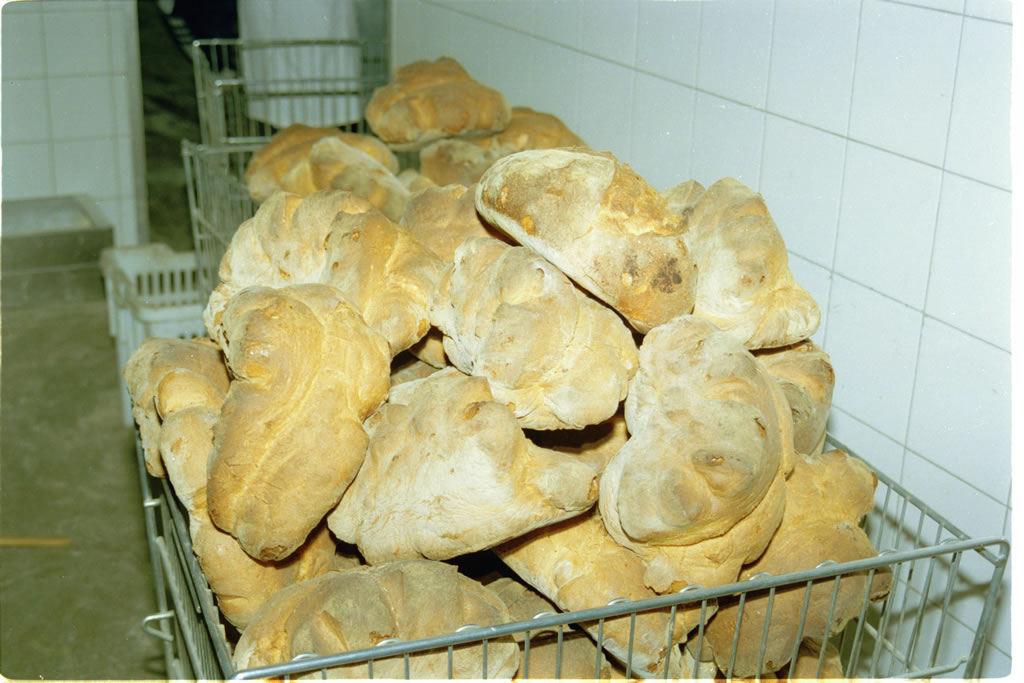
Il Pane di Matera IGP si trova nella forma a Cornetto (allungato e leggermente convesso) e a Forma Alta (alto e compatto, con “baciature” ai fianchi). La crosta è croccante, ha colore bruno dorato, spessore di almeno 3 mm e un odore tipico di bruciato. La mollica è invece di colore giallo con una porosità tipica molto difforme. Il sapore e l’odore sono estremamente caratteristici.
Storia
L’arte della panificazione è propria della tradizione locale da tempi molto antichi. Esistono testimonianze risalenti al Regno di Napoli che descrivono le particolari tecniche di panificazione. Inoltre, nella zona di produzione del Pane di Matera IGP numerose testimonianze artistiche e letterarie, ma anche leggende e racconti popolari, attestano l’importanza del pane nella vita e nell’economia del territorio.
Gastronomia
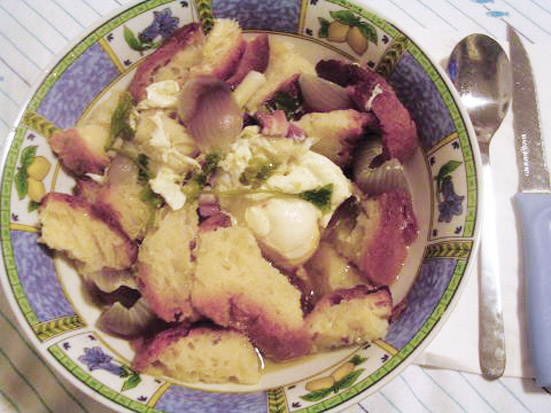
Il Pane di Matera IGP deve essere conservato in luogo asciutto. Per mantenerne intatta la fragranza è consigliabile avvolgerlo in un telo di lino fino al momento del consumo. Ottimo appena sfornato, si conserva indicativamente sette giorni nella pezzatura da 1 kg e quattordici giorni per la pezzatura da 10 kg. È indicato in abbinamento con i salumi locali e con i formaggi. Ottimo nella tradizionale feddarauss (bruschetta) con pomodoro, olio e origano. Molto utilizzato anche nelle zuppe di verdure sia calde che fredde, come la tipica cialledda coll, una minestra calda a base di pane, acqua e cipolle o pomodori, con l’aggiunta di verdure locali a piacere.
Commercializzazione
Il prodotto è immesso in commercio nelle tipologie Pane di Matera IGP a Cornetto oppure a Forma Alta. È commercializzato fresco, in pezzature da 500 g a 10 kg che devono presentare la marchiatura riportante le lettere in stampato maiuscolo “MT”. Il confezionamento deve essere effettuato con film microforato plastico a uso alimentare o con sacchetto di carta anch’esso a uso alimentare. Qualora il pane sia stato cotto in forno a legna, potrà essere aggiunta la dicitura “Pane cotto in forno a legna”.
Nota distintiva
La scelta di vecchie varietà di grano, quali la Senatore Cappelli, che donano al Pane di Matera IGP un gusto e un sapore inconfondibili è da ricondursi alle caratteristiche pedologiche e climatiche dell’area delle colline materane.