




Description
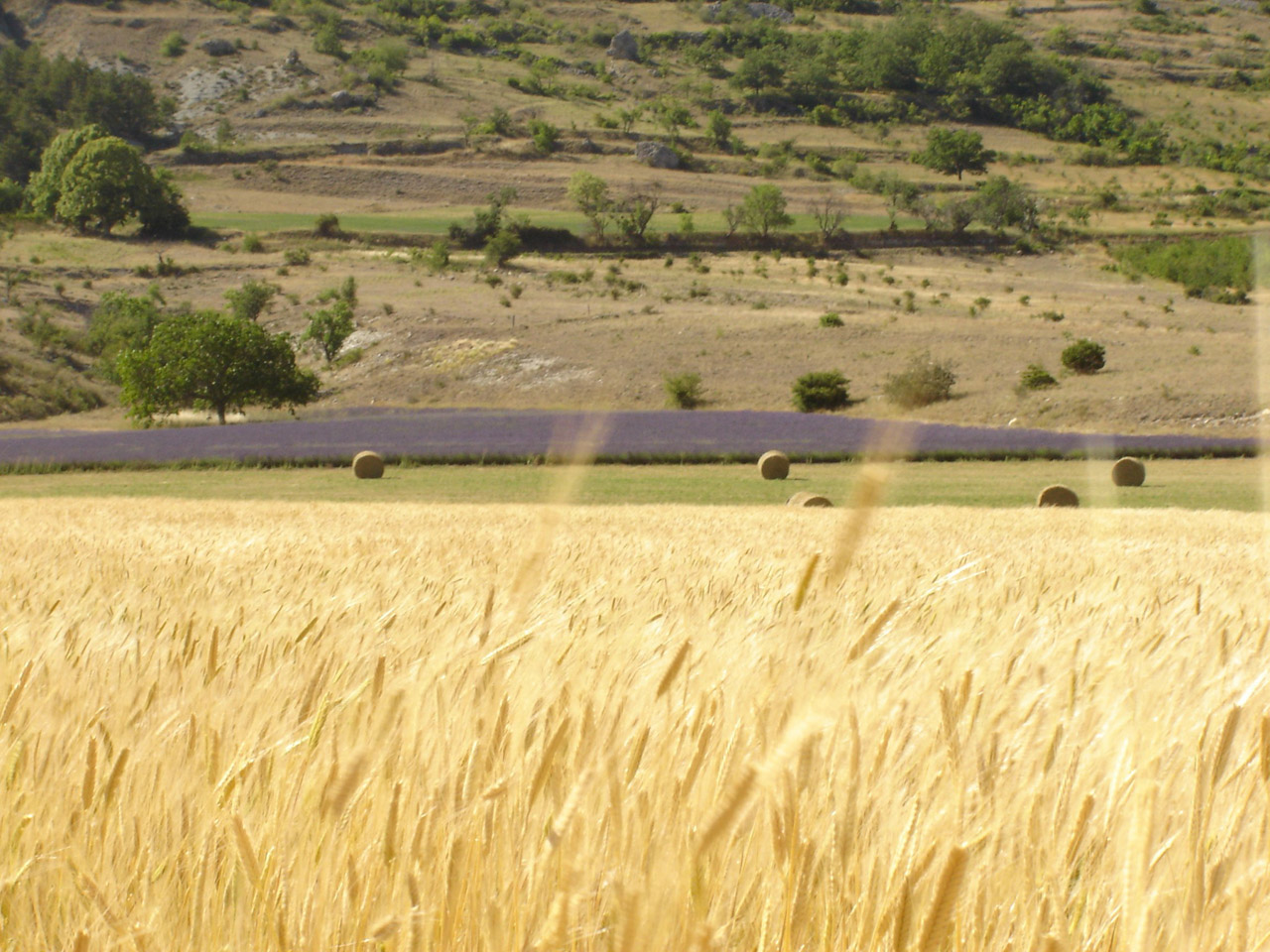
The Petit Épeautre de Haute Provence PGI is a cereal (literally meaning small spelt) belonging to the grass family and it is obtained from Triticum monococcum seeds.
Production Area
The production of the Petit Épeautre de Haute Provence PGI (production of the grain, of seed and husking) includes 235 municipalities in four departments: Alpes-de-Haute-Provence, Hautes-Alpes, Drôme and Vaucluse in the Rhone-Alps and Provence-Alpes-Azur regions in the southeast of France.
Production Method
The growing of the Petit Épeautre de Haute Provence PGI is carried out following traditional methods: crop rotation, seeds coming from the production area, sowing takes place in summer and autumn, use of chemical and synthetic products is prohibited, limited amount of fertilizers. The May rains allow the grain to swell while in July, the heat and absence of rains allow a healthy maturation of the plant. Once harvested, the Petit Épeautre de Haute Provence PGI is stored in the geographical area to await husking. Husking, which consists in removing the husk from the grain, is a very delicate process and takes place in artisanal workshops distributed throughout the geographical area and may be done up to two years from harvesting. Once husked, the grains may be bleached to decrease cooking time.
Appearance and Flavour
The Petit Épeautre de Haute Provence PGI is characterized by its flat bearded ears which grow in two ranks and is yellow-orange in colour. Before being consumed it must be husked (or possibly bleached). Bleached grain is grain which has been decorticated after an additional dehulling stage. The Petit Épeautre de Haute Provence PGI has a hazelnut taste.
History
The history of Petit Épeautre de Haute Provence PGI is linked to einkorn growing in Provence, which has ancient origins. Certain prehistoric sites in the area present traces of the presence of einkorn in that time. Thanks to its robust quality and storability, the Petit Épeautre de Haute Provence PGI has helped the local populations to survive during Roman occupation and during the invasion of the Nordic peoples. There are also numerous traces of einkorn in Provence in the Middle Ages.
Gastronomy
The use-by date of the Petit Épeautre de Haute Provence PGI is 18 months from the date of husking. The culinary tradition of einkorn is strong and has a noteworthy fame in Upper Provence. The Petit Épeautre de Haute Provence PGI is consumed after boiling in water for 30/40 minutes. The water volume must be four times the volume of the einkorn. The soft taste of Petit Épeautre de Haute Provence PGI goes well with vegetables or meat. It can be used in delicious soups, salads or risottos. It is a highly digestible cereal thanks to its fiber content and is rich in mineral elements.
Marketing
The product is sold as Petit Épeautre de Haute Provence PGI. It is marketed in form of grains or flour, in bags of 500 g or 1 kg or in larger bags of 3, 5, 10, or 25 kg.
Distinctive Features
The Petit Épeautre de Haute Provence PGI is cultivated at an altitude above 400 m, adapting to the extreme climatic conditions of the area, characterized by droughty summers and intensely cold winters. Moreover, the Petit Épeautre de Haute Provence PGI allows to valorize poorest soils on which lavender is also grown.