



Description
The Miód Wrzosowy z Borów Dolnoslaskich PGI is a honey made exclusively by the following species of bees or their crossbreeds: Apis mellifera mellifera (German black bee/European dark bee); Apis mellifera carnica (Carniolian honey bee); Apis mellifera caucasica (Caucasian honey bee).
Production Area
The heather species, from which the Miód Wrzosowy z Borów Dolnoslaskich PGI is produced, grow in the geographic area limited as follows: the rural municipal area Chojnów; the city Zgorzelec; the district Boleslawiec; the locality Lubkowek in the rural municipal area Warta Boleslawiecka; the entire municipal area Chojnów, in the district Legnica; the towns Szklary Dolne, Parchów and Trzmielów in the district Gmina Chocianów; the city Chocianów, all in the Lower Silesian Voivodeship; the forest management area Chocianów; the forest management area Przemków and the regional management of the national forests (Kanal Pólnocny); the location Niegoslawice; the cities Zagan and Zary in the Lubusz Voivodeship.
Production Method
before transporting the apiaries with the bee colonies to heather growing sites, the honey originated from other food sources is centrifuged. Internal walls are placed in the apiaries to sustain the honeycomb construction and the bees receive a sugar syrup supplement. The additional feeding of the swarm takes place in quantities that do not surpass 0.5 kg every 24 hours and has to be concluded, at the latest, seven days before the transportation to the heather fields. This transportation requires a high amount of attention and has to respect health rules, guaranteeing suitable ventilation of the apiaries. The collection of the nectar has to take place in the woods of Lower Silesia, when the heather is in bloom (in the months of August and September). The honey centrifuging process is carried out with honey extractors, either in specific mobile locations within the production site or in fixed locations owned by the apiarists. Successively, the honey is packaged in jars. Filtration, skimming off, pasteurisation and artificial heating of the honey is forbidden. Throughout all production phases, the honey temperature in the honeycomb should not surpass 45°C.
Appearance and Flavour
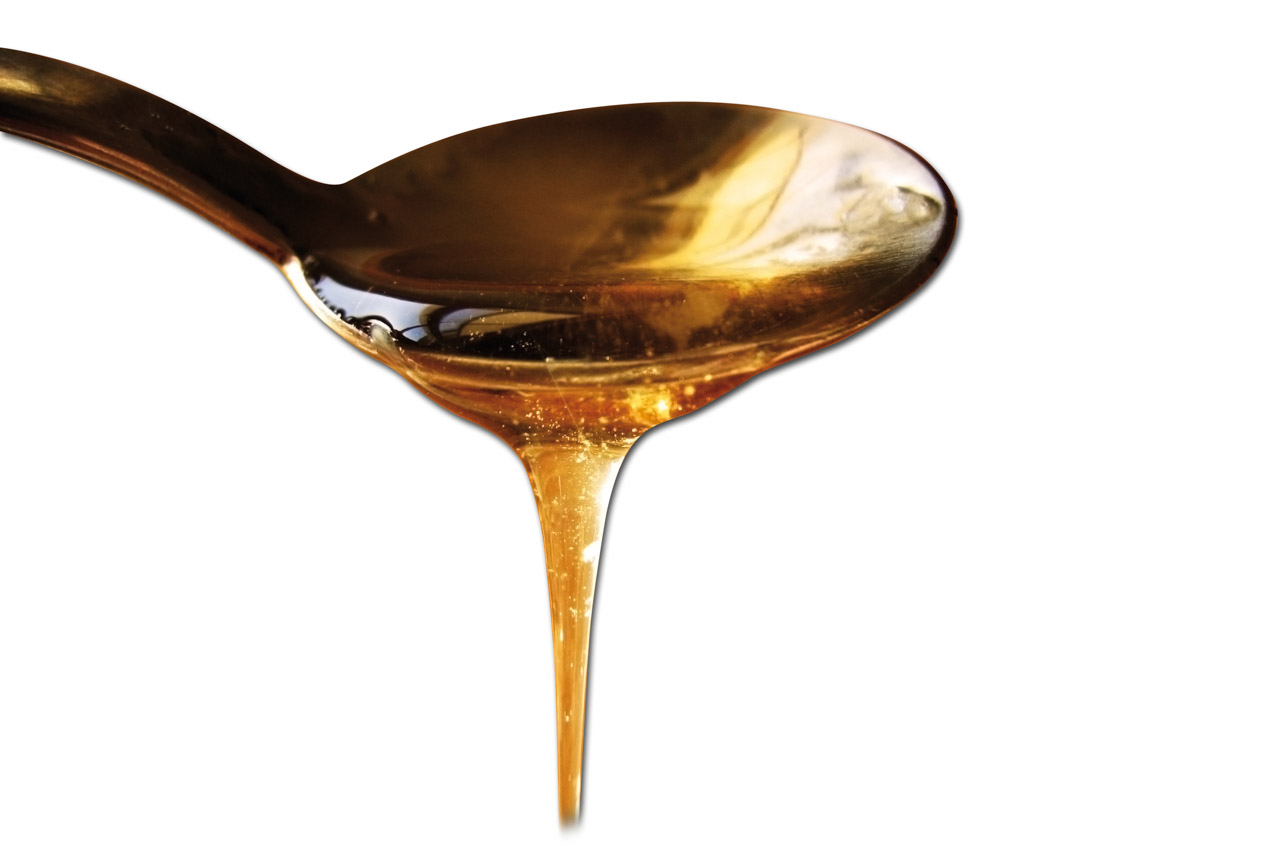
the Miód Wrzosowy z Borów Dolnoslaskich PGI has an amber colour verging on red-brown before crystallization; after this process, it takes on a yellow-orange colour verging on brown. The honey has a dense consistency, forming a gelatinous liquid. Its taste is slightly sweet, spicy and bitter. Its aroma is strong and recalls the fragrance of heather.
History
The first mentioning of apiculture in this area appears between the end of the 8th and beginning of the 9th centuries, in the Charlemagne court chronicles. Honey production in this area, especially heather honey such as the Miód Wrzosowy z Borów Dolnoslaskich PGI, is also attested by numerous references in the literature of various periods. Around 1900, the area covered by the heather so cherished by apiarists increased following the devastating fires, which caused the disappearance of the arboreal cover.
Gastronomy
The Miód Wrzosowy z Borów Dolnoslaskich PGI should be kept away from light and heat sources. It can be eaten naturally, spread on bread or on its own. It is also used as ingredient in the preparation of sweets.
Marketing
The product is commercialised as Miód Wrzosowy z Borów Dolnoslaskich PGI. It is sold in various suitable containers, whose volume should generally not exceed 1.5 kg.
Distinctive Features
The area of the Lower Silesian woods is well exposed to the sun, and in addition, its yearly average temperature is particularly high; this ensures that the nectar production is abundant even in rainy years, also favouring the production of the Miód Wrzosowy z Borów Dolnoslaskich PGI.