
Description
The Miód Kurpiowski PGI is honey from mixed flower nectar, to which honeydew can be added. The amount of pollen in every single plant is equal and not more than 30% and lowers to 10% with cultivated plants. Only bees from Apis mellifera mellifera (Centre European bee), Apis mellifera carnica (Ukraine bee) and from Apis mellifera caucasica (Caucasian bee) and their crossbreeds can be used for its production.
Production Area
The production area of Miód Kurpiowski PGI covers some municipal areas in six districts of the Mazowieckie Voivodeship and two districts in the Podalskie Voivodeship, in the area which is known as Kurpie.
Production Method
In May-June spring nectars are obtained coming from green areas such as meadows and pastures, whilst summer honeys are obtained from conifer forests, generally in July and August. Harvesting takes place traditionally in two phases: mid June and mid July. The conformity with specific rules guarantees the high quality of the product. In fact, during harvesting it is forbidden, first of all, to give the bee additional food which, on the contrary, is allowed before winter to guarantee overwintering. However, in this case, the food can be integrated only with beet syrups or glucose-fructose syrups. The products which repel the bees are not allowed during harvesting. The entire production process has to take place at a temperature of maximum 30°C, whilst pollen filtering, guided crystallisation, pasteurisation or honey artificial heating techniques are not allowed. The packaging has to take place in the production area and before crystallisation.
Appearance and Flavour
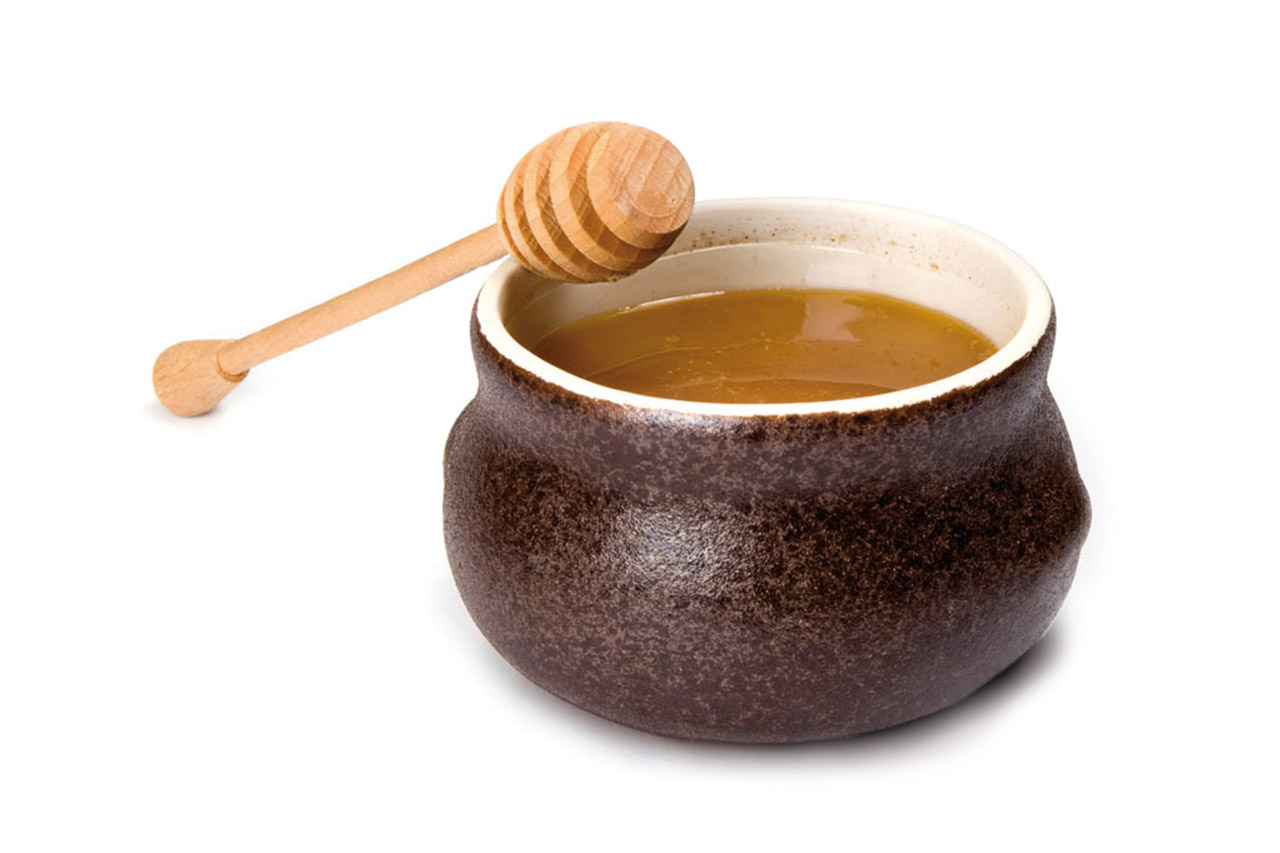
Miód Kurpiowski PGI can be liquid or crystalline, has a dense and viscous consistency and is light yellow to straw yellow in colour up to brown with green reflections when the honeydew is added. The aroma is spicy, the taste sweet and delicate.
History
Bee-keeping has a long tradition in the Kurpie area. Many documents confirm the importance and fame of the honey produced in this land: amongst them we mention the royal decree on bee-keeping from 1401 and the law on bee-keeping, which since 1559 has established the rules for the traditional use of this work and has been in force up to modern times. Since 1976 in September there has been a festival dedicated to Miód Kurpiowski PGI, as a symbol of the close link with the land, and every year it achieves high success in terms of public and visitors, therefore it has become the most important event in the region.
Gastronomy
Miód Kurpiowski PGI has to be stored in a fresh and dry place, protected from direct light. It is very good when eaten natural, alone or with fresh bread, but it can be used also to sweeten hot drinks. It is also the principal ingredient of different recipes, from the simple antipasto with cheese and dry fruit to the peculiar carp cooked in the "Polish way", where the honey is mixed with raisins, almonds and a sauce of ginger bread to the traditional Polish dessert: the pierniki.
Marketing
The product is sold as Miód Kurpiowski PGI.
Distinctive Features
Miód Kurpiowski PGI is characterised by the Kurpie area which is a rather uniform mosaic of different natural areas, a characteristic demonstrated by the absence of dominating pollens. Plus the area is poor as regards nectar production; therefore the uniqueness of this product is also owed to the skill of bee keepers in identifying and managing beehives in the best way.