



Description
Gönci Kajszibarack PGI indicates apricots belonging to the Prunus armeniaca L. species and includes the Gönci magyar kajszi, Magyar kajszi C 235, Mandulakajszi, Bergeron, Ceglédi Piroska, Ceglédi bíborkajszi, Ceglédi arany, Ceglédi óriás and Pannónia varieties.
Production Area
The production area of Gönci Kajszibarack PGI apricots covers four specific districts in Borsod-Abaúj-Zemplén County: Abaúj-Hegyköz, Encs, Szerencs, Szikszó.
Production Method
The fruit tree plantations are established in sunny and sheltered areas at an altitude of between 150 and 300 metres a.s.l. Harvest begins in mid-June and is completed in late August. The fruit is picked by hand and due to the differences in the ripening times of the varieties each field may be harvested in an average of three phases: pre-harvest, main harvest and post-harvest. The fruit is transported to a storage chamber and cooled to a temperature of approximately 4°C, after which it is sorted by size and colour, more often by hand than mechanically. Finally, the crates are placed in a 4-6°C storage unit for up to 30 days.
Appearance and Flavour
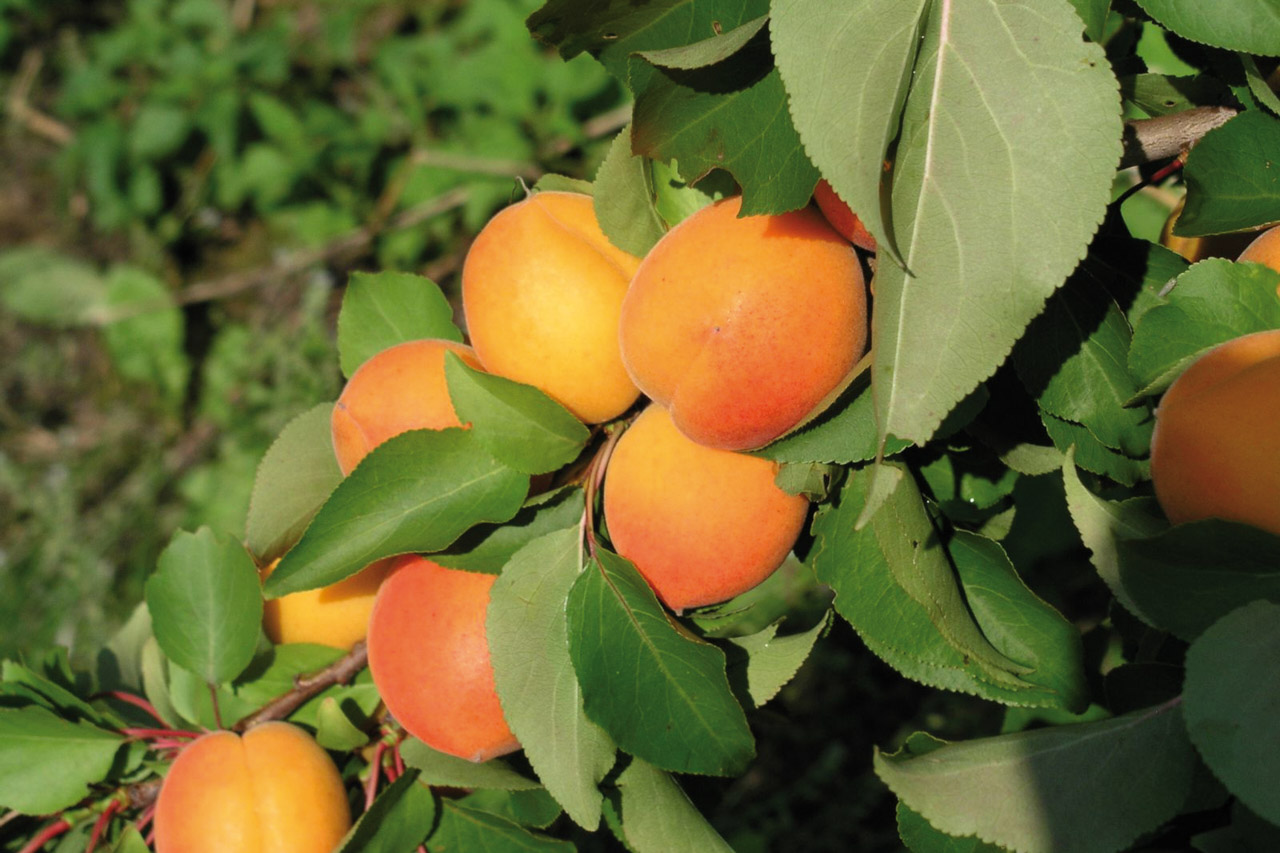
Gönci Kajszibarack PGI apricots are medium to large in size. Depending on the variety they can be spherical, ovoid, conical or slightly elongated in shape and various shades of orange in colour, often with dark or carmine red shades on the side exposed to the sun. They have a sweet, sour and aromatic flavour and the consistency varies.
History
The name "kajszi Baraczk" (apricot) appears for the first time in 1667 in a book by János Lippay, Posoni kert (The Garden of Bratislava), but it was an outbreak of phylloxera that devastated vineyards in the 1880's that gave a fresh impetus to fruit production in the hilly areas. The vineyards were replaced in many places, including the Gönc region, by fruit trees such as apricots. Until the 1850's Gönc had been famous primarily for its cherries and it was only in 1871 that it began to become known for apricots, when János Korponay mentioned that they were being produced in "fair quantities".
Gastronomy
Gönci Kajszibarack PGI apricots are best kept in a cool dry place. They should ideally be consumed fresh after being thoroughly washed. Alternatively, Gönci Kajszibarack PGI apricots can be the main ingredient of fruit juices and jams, but they are also tasty as dried candied fruit or in other Hungarian specialities, such as a delicious sauce that is used to garnish meat dishes such as lamb or duck liver. In the summer Gönci Kajszibarack PGI apricots are perfect in a delicious mixed seasonal fruit salad.
Marketing
The product is marketed as Gönci Kajszibarack PGI, in the Gönci magyar kajszi, Magyar kajszi C 235, Mandulakajszi, Bergeron, Ceglédi Piroska, Ceglédi bíborkajszi, Ceglédi arany, Ceglédi óriás, and Pannónia varieties. They are packed in wooden or plastic crates on which there is a label indicating the fruit's origin.
Distinctive Features
Gönci Kajszibarack PGI apricots mature from 6-10 days later than varieties cultivated in other areas. The cooler climate means that the acids and aromatic substances decompose slower over the course of ripening.