



Description
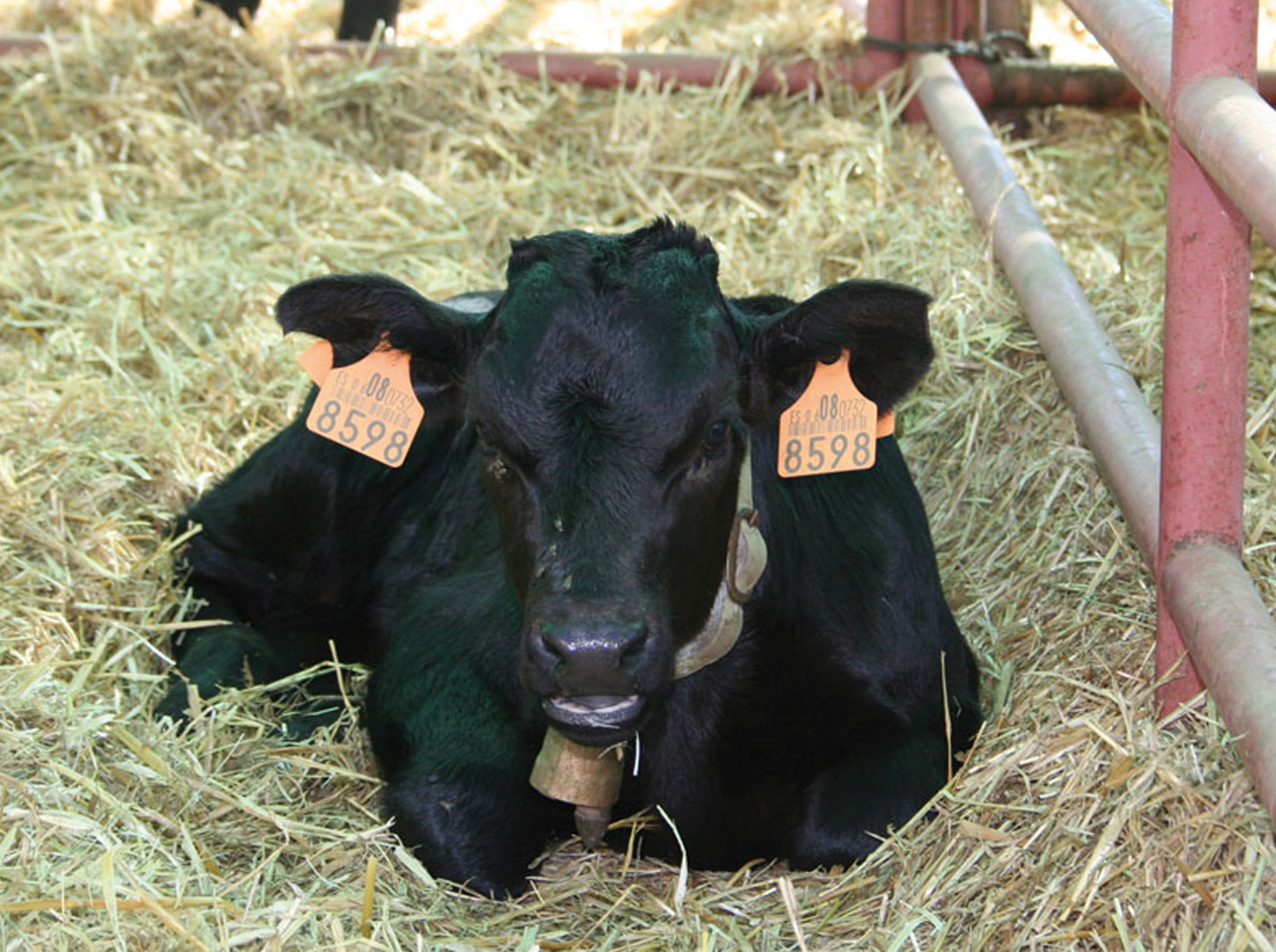
The Carne de Ávila PGI is a meat obtained from the Avileña-Negra Ibérica breed, a local breed in a uniform black colour, which may sometimes show a variation of tones.
Production Area
The production area of the cattle of the Carne de Ávila PGI covers the agricultural territories from the districts of Huelva, Jaen, Sevilla, Teruel, Toledo, Caceres, Badajoz, La Rioja, Madrid and the areas of the Autonomous Community of Castilla y León. The slaughtering area is situated in the districts of Ávila, Salamanca, Segovia, Valladolid, Toledo, Caceres, Badajoz and Madrid.
Production Method
The stock natural resources are principally used for feeding, as the animals from the Avileña-Negra Ibérica breed adapt easily to every kind of pasture. When necessary, the feed can be integrated with authorised fodder, but food products which can affect the normal growth and development of the animal are forbidden. The reproduction cycle is carried out with free mounting process. The animals raised for slaughtering are subdivided into three types according to the age: Ternero, calves of maximum 10 months who have always been with their mothers; Añojo, veal calves aged from 10 to 18 months; Novillo, beef cattle aged between 18 and 36 months. The meat comes exclusively from registered farms. The process includes butchering and cutting into various parts.
Appearance and Flavour
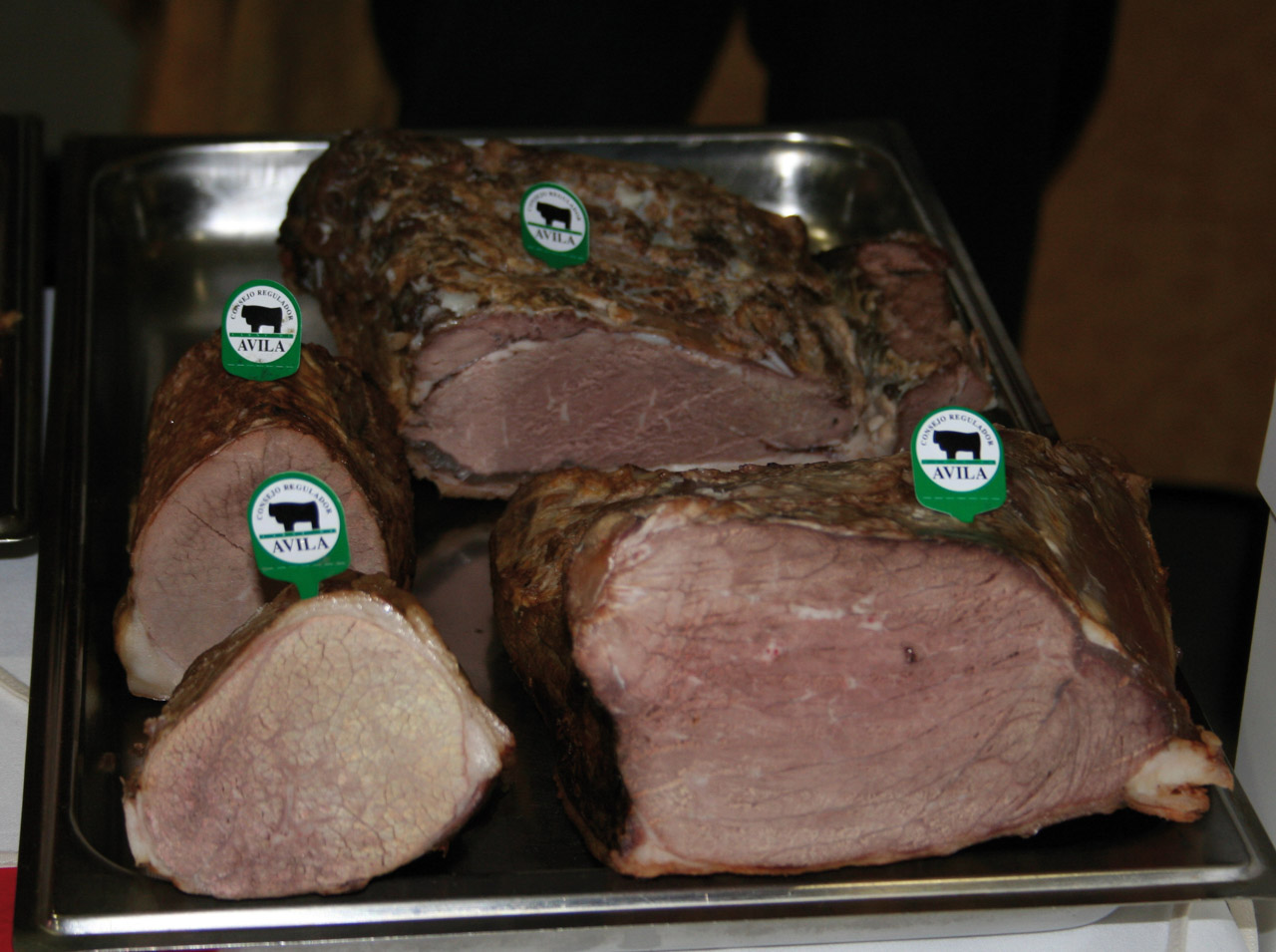
The Carne de Ávila PGI from Ternero is brilliant pink colour, marbled with white fat, and features a compact consistency; the Carne de Ávila PGI from Añojo ranges from light pink to deep red, with fat which varies from white to cream colour, and a compact consistency; the Carne de Ávila PGI from Novillo ranges in colour from purple red to cherry red and has a compact consistency and a cream-colour fat.
History
Many documents refer to the production of Carne de Ávila PGI: the oldest one tells of the bovine exploitation in this zone, dating back to prehistoric times. In the 14th and 15th centuries, markets and trade fairs developed, whilst product and cattle marketing became intense; in this era, a certain importance was attributed to the Ternera de Castilla. In the 18th century, the Castellana breed was widespread as work cattle. In the second half of the 19th century, the Serrana breed sprung up and, along times, evolved into the Avileña-Negra Ibérica.
Gastronomy
When fresh, the Carne de Ávila PGI should be conserved in the refrigerator for a period of not more than two days, wrapped in transparent film in the coolest compartment. This meat is very versatile and is excellent when cooked, depending on the cut, it can be grilled, spit roasted, in the oven or pan seared. It is the basic ingredient for many recipes and is well-appreciated for its rich and pleasant flavour. It is also prepared boiled with spices or as an excellent stew. The Carne de Ávila PGI is perfect with red wines from Castile y León. The choice of wine depends mainly on the type of cooking and preparation of the meat.
Marketing
The product is sold as Carne de Ávila PGI in three types: Ternero, Añojo, and Novillo. It is sold in slices or packaged in portions of various weights in sealed containers.
Distinctive Features
The Avileña-Negra Ibérica breed, which provides the Carne de Ávila PGI, is very long-lived and can cover long distances, a very important characteristic for the transhumance. It is able of using pastures situated in very difficult environments in the best way, with a good production performance.